Six German states gain a Nextcloud-based school cloud: what the IONOS deal is and what it is not
Berlin, Bremen, Hamburg, Hesse, North Rhine-Westphalia and Rhineland-Palatinate can now use a Nextcloud-based workspace for their schools, run by IONOS in German data centres.
By Andrew Ingleton · Published
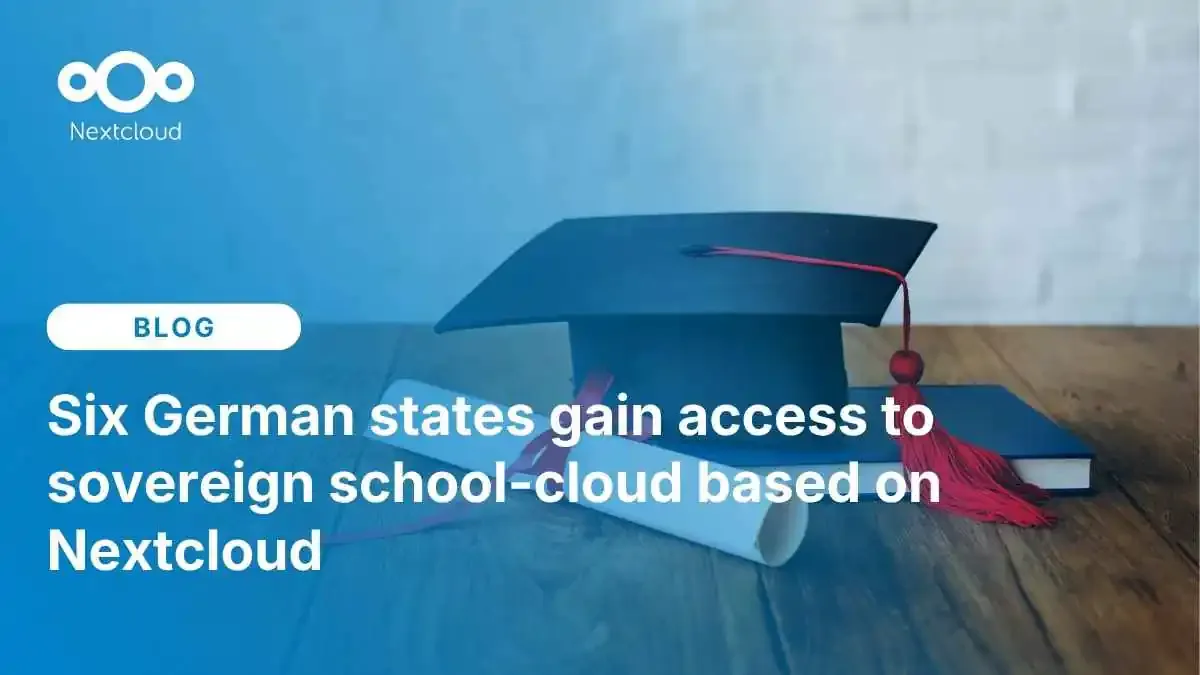
Nextcloud announced on 3 November that six German states have gained access to a school collaboration service built on its platform. It is a useful real-world example of the "sovereign cloud" idea that we looked at in our pieces on an air-gapped Nextcloud and on Nextcloud Hub 26 Summer.
What was announced
According to Nextcloud, the service is called IONOS Nextcloud Workspace. It was awarded under the KoDaS framework agreement: after a public procurement run by govdigital eG, IONOS won a four-year framework contract. IONOS is the main contractor and is responsible for delivering and operating the service, using cloud infrastructure in German data centres.
The six states named are Berlin, Bremen, Hamburg, Hesse, North Rhine-Westphalia and Rhineland-Palatinate. Other German states can join. Schools and school authorities may use the service as needed, and there is no obligation to adopt it. It combines file management, online document collaboration and communication tools in one environment.
What the announcement does not say
- It gives no figures for schools, teachers or pupils, so we cannot tell how widely it will be used.
- It gives no prices and no timetable for roll-out.
- It is a vendor announcement. The argument that schools should teach digital skills rather than dependence on one supplier is Nextcloud's position. Its CEO, Frank Karlitschek, is quoted: "Schools should teach digital skills, not dependency on individual technology providers."
Why it matters beyond Germany
Hosted by a provider, this is not self-hosting in the sense that readers of this site usually mean. The software is open source, but IONOS operates the servers. What changes is where the data sits, who the contract is with, and that the public sector can in principle move to another provider because the platform underneath is open.
For UK readers, the lesson is practical. If you run a club, a family or a small school group, the same pattern is open to you at small scale: pick open software, then choose whether to host it yourself or pay a provider. Our Nextcloud Teams guide shows how to organise shared workspaces once you have an instance.
Questions worth asking of any "sovereign" service
- Who operates the servers, and under which country's law?
- Can you export all your data in an open format?
- Are the encryption and key-management arrangements documented?
- What happens at the end of the contract?
Source: Nextcloud blog, 3 November 2026 (Six German states gain access to sovereign school-cloud based on Nextcloud).